
Some links on this page are affiliate links. This means we may earn a commission at no additional cost to you if you click through and make a purchase, you can check our Affiliate Disclosure. Thank you for your support!
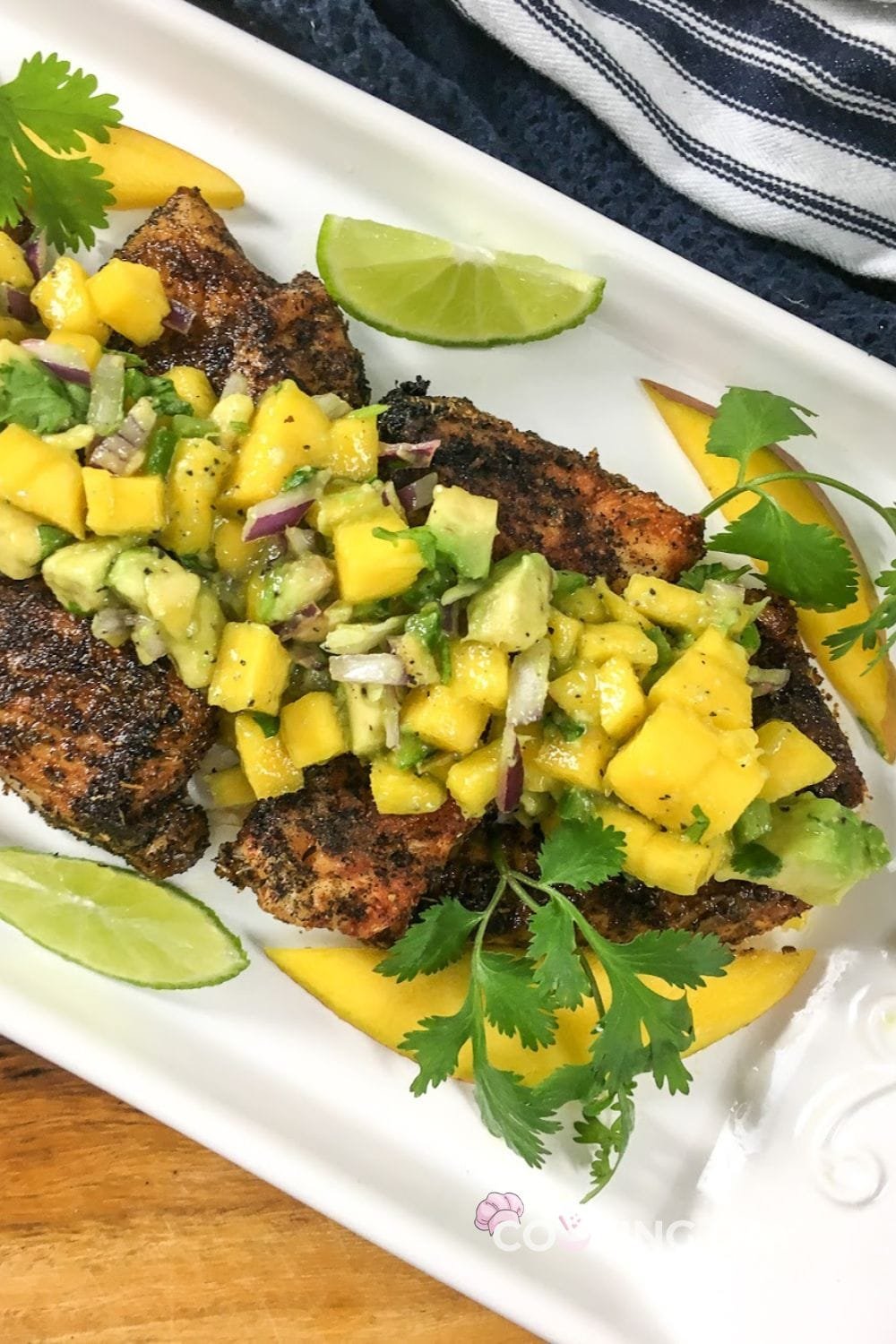
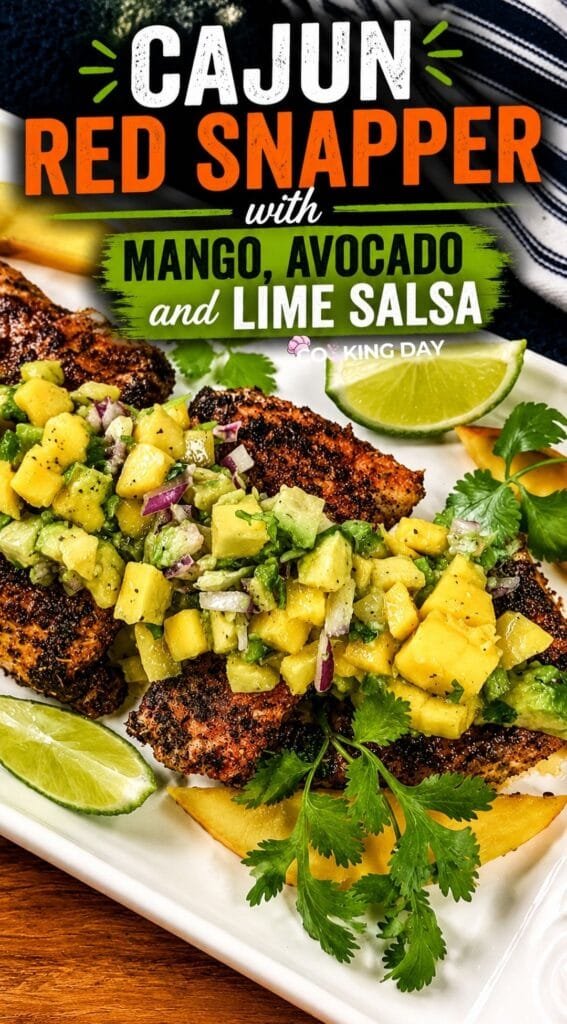
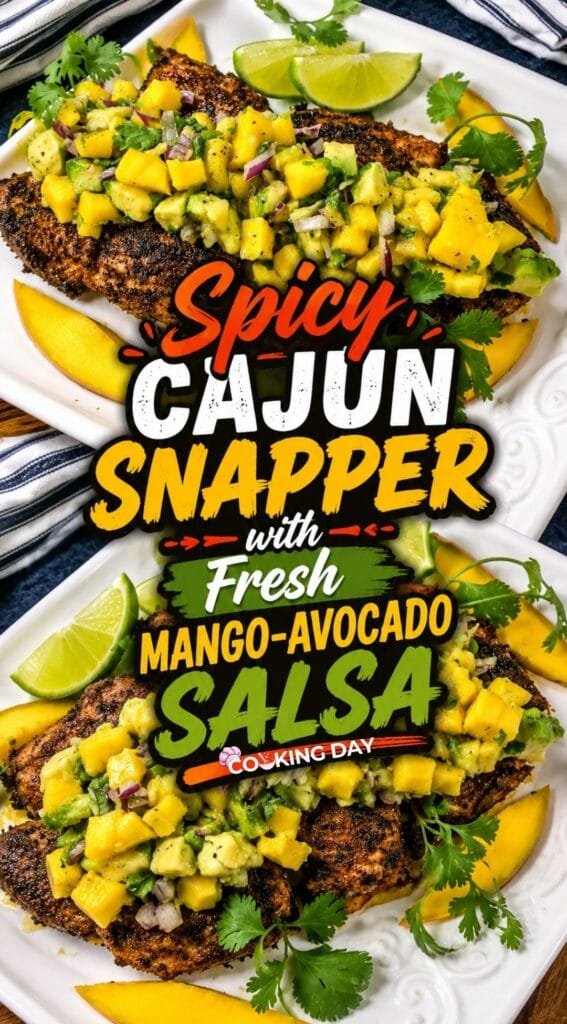
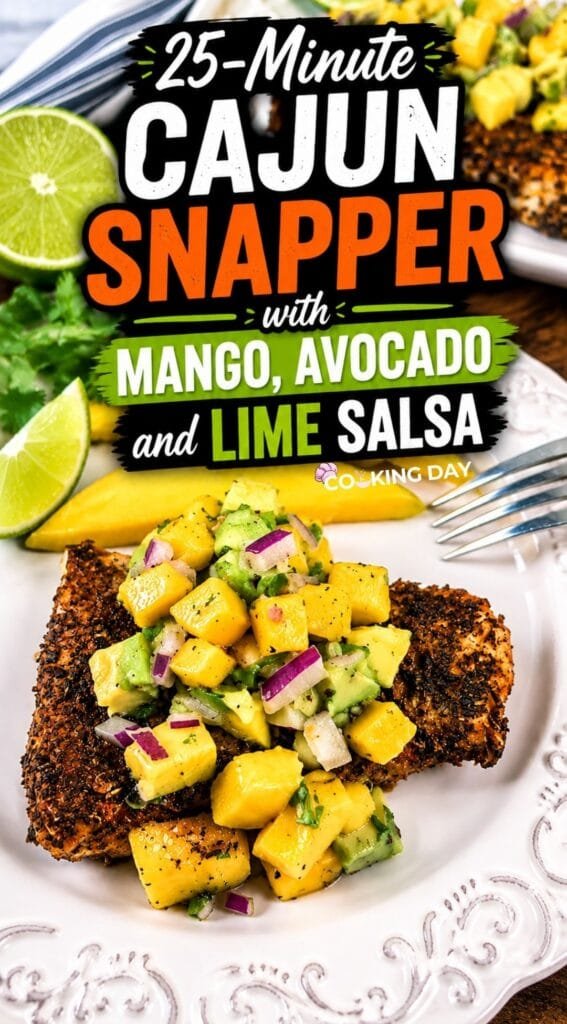
This Spicy Cajun Snapper with Mango-Avocado Salsa combines tender pan-seared fish with a colorful salsa made from ripe mango, creamy avocado, fresh cilantro, jalapeño, and lime. The homemade Cajun seasoning gives the snapper plenty of savory flavor and lets you easily control how much heat goes into the dish.
The contrast is what makes this recipe especially good. The snapper comes out warm and boldly seasoned from the skillet, while the fresh mango-avocado salsa adds sweetness, acidity, creaminess, and a little extra heat from the jalapeño.
With about 15 minutes of prep and 10 minutes of cooking, this is an easy fish dinner you can have on the table in roughly 25 minutes. Serve it immediately after cooking so you get the best contrast between the freshly seared snapper and cool, fresh salsa.
Why This Spicy Cajun Snapper Works
The Cajun seasoning is easy to adjust. Using ½ to 1 teaspoon of cayenne lets you control the heat without changing the rest of the spice blend.
Snapper cooks quickly. The fillets need only about 3 to 5 minutes per side, depending on their thickness.
Mango balances the spicy seasoning. Its natural sweetness provides a refreshing contrast to the cayenne and savory spices.
Avocado adds creaminess without a separate sauce. It gives the salsa a rich texture that pairs naturally with the lean fish.
Fresh lime keeps the salsa bright. Lime juice adds acidity that balances both the mango and avocado.
The salsa requires no cooking. You can prepare it before the fish so it’s ready to spoon over the snapper as soon as it leaves the skillet.
Ingredients
For the Spicy Cajun Seasoning
- 1 tablespoon paprika
- 1 teaspoon garlic powder
- 1 teaspoon onion powder
- ½ to 1 teaspoon cayenne pepper
- ¾ teaspoon dried thyme
- ¾ teaspoon dried oregano
- 1½ teaspoons sea salt
- ¾ teaspoon ground black pepper
The cayenne is where you can make the biggest adjustment to the heat. Start with ½ teaspoon for a milder result or use the full teaspoon when you want a spicier crust on the fish.
Keep in mind that the seasoning mixture already contains 1½ teaspoons of sea salt. There’s no need to separately salt the snapper before applying the Cajun seasoning.
For the Mango-Avocado Salsa
- 1 large mango, peeled and diced
- 1 large avocado, peeled and diced
- ½ small red onion, diced
- ½ medium jalapeño pepper, finely diced
- 2 garlic cloves, minced
- 3 tablespoons fresh cilantro, finely chopped
- 3 tablespoons fresh lime juice
The salsa gives you several contrasting textures and flavors in one spoonful. Mango brings sweetness, avocado provides creaminess, red onion adds crunch, and lime keeps everything fresh and bright.
Because ripe avocado is delicate, stir the salsa gently rather than vigorously mixing it.
For the Snapper
- 4 (5-ounce) red or yellowtail snapper fillets
- 2 tablespoons extra virgin olive oil, divided
Either red or yellowtail snapper works here. More important than the variety is the thickness of the individual fillets, since thicker pieces will need more time in the skillet.
Equipment
- Small mixing bowl
- Large mixing bowl
- Large skillet
- Wooden spoon or spatula
- Cutting board
- Sharp knife
- Tongs or fish spatula
- Instant-read thermometer
A fish spatula can make it easier to turn delicate snapper fillets without breaking them, although a regular spatula can also work.
Step by Step Instructions
Step 1: Make the Cajun Seasoning
Add the paprika, garlic powder, onion powder, cayenne pepper, dried thyme, dried oregano, sea salt, and black pepper to a small bowl.
Stir thoroughly until the spices are evenly combined.
Set the seasoning aside while you prepare the salsa.
Step 2: Prepare the Mango-Avocado Salsa
Add the diced mango, avocado, red onion, jalapeño, minced garlic, and chopped cilantro to a large bowl.
Pour the fresh lime juice over the ingredients.
Gently fold everything together until evenly combined.
Avoid stirring too aggressively, particularly if your avocado is very ripe. You want the pieces to retain their shape rather than becoming mashed into the salsa.
Set the salsa aside while you prepare the snapper.
Step 3: Season the Snapper
Pat the snapper fillets dry.
Removing excess surface moisture helps the seasoning adhere and gives the fish a better opportunity to sear in the skillet.
Sprinkle the Cajun seasoning evenly over both sides of each fillet.
Gently rub or press the spices onto the surface so they adhere well.
Step 4: Pan-Sear the Snapper
Heat 1 tablespoon of extra virgin olive oil in a large skillet over medium heat.
Once the oil is hot, add the seasoned snapper fillets without overcrowding the pan.
Cook for 3 to 5 minutes on the first side, depending on the thickness of the fillets.
Carefully turn the fish and cook for another 3 to 5 minutes, or until cooked through.
If all four fillets don’t fit comfortably in your skillet, cook them in batches. Add some of the remaining olive oil before cooking the next batch if the skillet becomes dry.
The snapper is ready when the flesh is opaque, flakes easily with a fork, and reaches an internal temperature of 145°F (63°C).
Step 5: Add the Salsa and Serve
Transfer the cooked snapper to individual plates or a serving platter.
Spoon the fresh mango-avocado salsa generously over each fillet.
Serve immediately while the snapper is still hot.
Tips for the Best Cajun Snapper
- Pat the fish dry. Excess moisture on the surface can interfere with browning and make it harder for the seasoning to adhere.
- Adjust the cayenne before seasoning the fish. Use ½ teaspoon for gentler heat or the full teaspoon for a spicier result.
- Don’t add extra salt automatically. The Cajun seasoning already contains sea salt, so taste the finished dish before adding more.
- Use similar-sized fillets when possible. They’ll be more likely to finish cooking at approximately the same time.
- Watch the thickness of the fish. A thin fillet may be ready closer to 3 minutes per side, while a thicker piece can require closer to 5 minutes.
- Don’t crowd the skillet. Give the fillets enough room to cook properly. Work in batches when necessary.
- Fold the salsa gently. This helps the avocado pieces retain their shape.
- Prepare the salsa before cooking the fish. Once the snapper is ready, you can serve it immediately rather than letting it sit while you finish the salsa.
Common Mistakes to Avoid
- Starting with wet fish. Pat the fillets dry before adding the Cajun seasoning.
- Using all the cayenne without considering your preferred heat level. The difference between ½ teaspoon and 1 teaspoon can be noticeable, so choose the amount that works for you.
- Adding extra salt before tasting. The spice mixture already contains a substantial amount of salt.
- Overcrowding the skillet. Crowding can interfere with searing and make the fillets more difficult to turn.
- Following the cooking time without considering thickness. Use the 3 to 5 minute range as a guide and check the actual fish for doneness.
- Overcooking the snapper. Remove it once it is opaque, flakes easily, and reaches 145°F (63°C).
- Overmixing the salsa. Vigorous stirring can break down a ripe avocado and turn the salsa creamy rather than chunky.
Expert Tips
The thickness of the snapper is the biggest variable during cooking. Start checking thinner fillets toward the lower end of the 3 to 5 minute range rather than automatically cooking every piece for the full amount of time.
An instant-read thermometer is particularly useful with thicker fillets. Check the thickest section and remove the fish once it reaches 145°F (63°C).
For better surface browning, make sure the skillet and oil are hot before adding the seasoned fish. Once the snapper is in the pan, give it time to cook before trying to turn it.
The salsa is best prepared shortly before serving. Mango and avocado are both at their best when freshly cut, and the avocado will maintain a better texture when the ingredients are gently folded together.
Variations
- Milder Cajun snapper: Use ½ teaspoon of cayenne pepper in the seasoning mixture.
- Spicier Cajun snapper: Increase the cayenne to the full 1 teaspoon.
- Less spicy salsa: Remove the pale inner ribs and seeds from the jalapeño before finely dicing it.
- Hotter salsa: Leave some of the jalapeño’s pale inner ribs intact for additional heat.
- Extra lime: Serve fresh lime wedges alongside the fish for anyone who prefers a brighter citrus finish.
- Salsa on the side: Instead of spooning the salsa directly over the fish, serve it alongside each fillet so everyone can add their preferred amount.
Ingredient Substitutions
- Red snapper: Yellowtail snapper can be used instead.
- Yellowtail snapper: Red snapper works equally well with the Cajun seasoning and fresh salsa.
Since the mango, avocado, lime, cilantro, and jalapeño create the main character of the salsa, keeping those ingredients will give you the intended balance of sweet, creamy, fresh, and spicy flavors.
What to Serve With Spicy Cajun Snapper
The bold Cajun seasoning and fresh mango-avocado salsa pair especially well with lighter sides that complement the fish without overpowering its fresh, spicy flavors.
Apple Couscous Salad with Fresh Herbs & Lemon is a great option for a more substantial side. The couscous adds heartiness, while fresh herbs and lemon complement the lime and cilantro in the mango-avocado salsa.
For something fresh and colorful, try Orange and Tahini Piyaz. The citrus flavors provide a bright contrast to the spicy Cajun seasoning while the tahini adds richness.
You could also serve the snapper with Quick & Easy Mediterranean Pasta Salad when you want a heartier meal, especially for a summer lunch or casual dinner.
For a complete meal, pair the Spicy Cajun snapper with the Apple Couscous Salad and serve the mango-avocado salsa generously over the fish.
Storage Instructions
Cooked snapper is best served immediately, but leftovers can be refrigerated.
Allow the fish to cool, then transfer it to an airtight container and refrigerate promptly. Use the cooked snapper within 3 to 4 days.
Store the mango-avocado salsa separately from the fish. Because avocado begins to soften and discolor after cutting, the salsa is best enjoyed as fresh as possible.
Reheat the snapper gently until heated through. Avoid prolonged reheating, which can dry out the delicate fish.
For the best texture, add the cold or cool mango-avocado salsa after reheating the fish rather than warming the salsa with it.
More Recipes to Try
If you enjoy quick seafood dinners with bold flavors, try these next:
- Chipotle Lime Shrimp Kabobs for smoky grilled shrimp with citrus and spice.
- Grilled Spiced Shrimp Kabobs with Zhoug Sauce for grilled shrimp paired with a fresh, spicy herb sauce.
- Crispy Lemon Panko Fried Shrimp when you’re in the mood for crispy seafood with bright lemon flavor.
- Chinese Salt and Pepper Shrimp for another spicy seafood dinner with a completely different flavor profile.
Final Thoughts
This Spicy Cajun Snapper with Mango-Avocado Salsa is a great example of how a simple contrast can make a quick dinner more interesting. The snapper is warm, savory, and spicy, while the salsa brings cool mango, creamy avocado, fresh cilantro, jalapeño, and plenty of lime.
The fish cooks quickly, so have the salsa ready before the fillets go into the skillet. Pay attention to fillet thickness, avoid overcrowding the pan, and use 145°F (63°C) as your doneness target.
From there, all that’s left is to spoon the fresh salsa over the hot Cajun snapper and serve it right away.
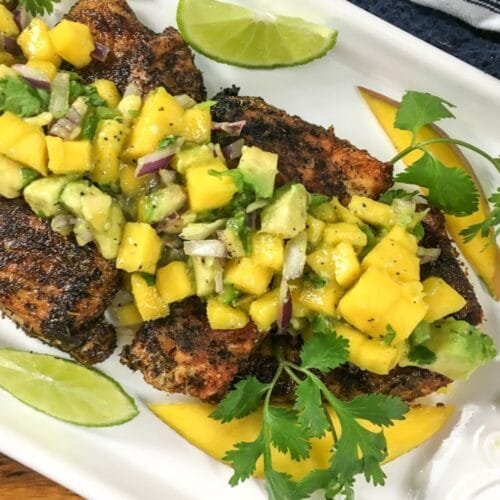
Spicy Cajun Snapper with Mango-Avocado Salsa

Equipment
- Small mixing bowl
- Large mixing bowl
- Large skillet
- Wooden spoon or spatula
- Cutting board
- Sharp knife
Ingredients
Spicy Cajun Seasoning
- 1 tablespoon paprika
- 1 teaspoon garlic powder
- 1 teaspoon onion powder
- ½ to 1 teaspoon cayenne pepper
- ¾ teaspoon dried thyme
- ¾ teaspoon dried oregano
- 1½ teaspoons sea salt
- ¾ teaspoon ground black pepper
Mango-Avocado Salsa
- 1 large mango, peeled and diced
- 1 large avocado, peeled and diced
- ½ small red onion, diced
- ½ medium jalapeño pepper, finely diced
- 2 garlic cloves, minced
- 3 tablespoons fresh cilantro, finely chopped
- 3 tablespoons fresh lime juice
Snapper
- 4 (5-ounce) red or yellowtail snapper fillets
- 2 tablespoons extra virgin olive oil, divided
Instructions
1. Make the Cajun Seasoning
- In a small bowl, combine the paprika, garlic powder, onion powder, cayenne pepper, dried thyme, dried oregano, sea salt, and black pepper.Stir until evenly combined and set aside
2. Prepare the Mango-Avocado Salsa
- In a large bowl, combine the mango, avocado, red onion, jalapeño, garlic, and cilantro.Add the lime juice and gently stir until combined. Set aside while you prepare the fish.
3. Season the Snapper
- Pat the snapper fillets dry. Sprinkle the Cajun seasoning evenly over both sides of each fillet.Gently rub the seasoning onto the fish so it adheres well.
4. Cook the Snapper
- Heat 1 tablespoon of the olive oil in a large skillet over medium heat.Add the seasoned snapper fillets and cook for 3 to 5 minutes per side, depending on their thickness. Add some of the remaining olive oil if needed when cooking additional fillets or if the skillet becomes dry.The fish is ready when it is opaque, flakes easily with a fork, and reaches an internal temperature of 145°F (63°C).
5. Serve
- Remove the snapper from the skillet and serve immediately with the mango-avocado salsa spooned over the top.
Notes
- Adjust the heat: Use ½ teaspoon cayenne pepper for a milder Cajun seasoning or increase it to 1 teaspoon for more heat.
- Cajun seasoning: The seasoning mixture contains salt, so taste the finished dish before adding additional salt.
- Snapper: Red snapper or yellowtail snapper works well. Fillet thickness will affect the cooking time.
- Cooking the fish: Avoid overcrowding the skillet. If necessary, cook the snapper in batches and use the remaining olive oil for the second batch.
- Salsa: Gently fold the salsa ingredients together to help the avocado keep its shape.
- Serving: For the best texture and flavor, serve the snapper immediately after cooking with the fresh salsa on top.