
Some links on this page are affiliate links. This means we may earn a commission at no additional cost to you if you click through and make a purchase, you can check our Affiliate Disclosure. Thank you for your support!
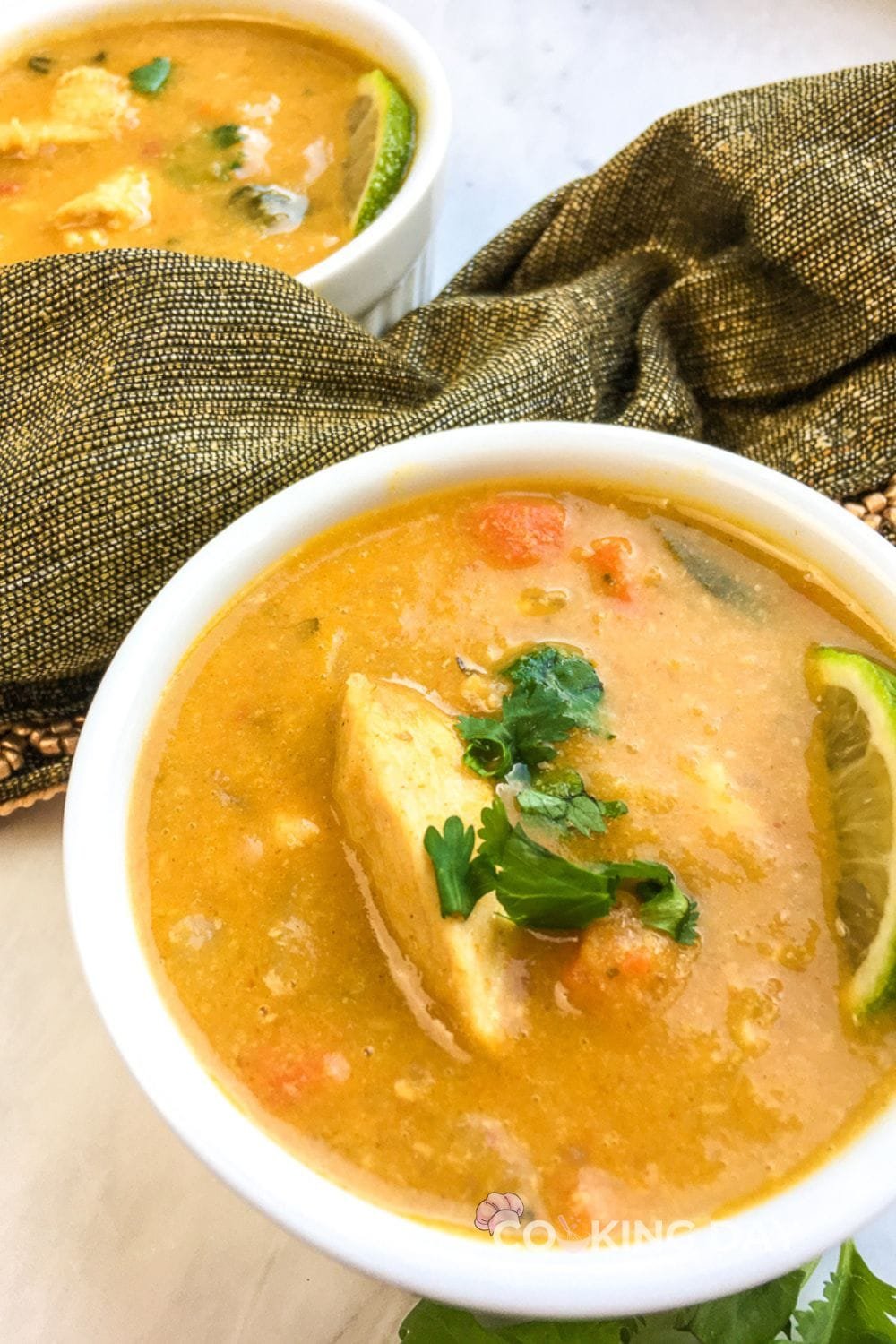
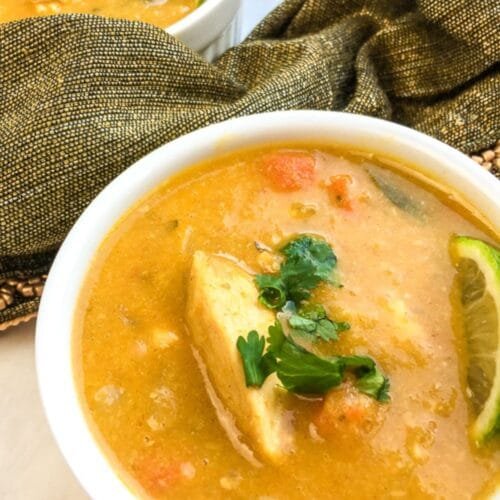
This Thai Coconut Curry Chicken Soup brings together tender chicken, colorful bell peppers, baby spinach, fresh ginger, garlic, and red curry paste in a creamy coconut milk broth. It has plenty of savory curry flavor, balanced with fresh lime juice and a small amount of maple syrup.
The soup comes together quickly in one pot. The onion and chicken cook first, followed by the aromatics and curry paste so they have a chance to become fragrant before the coconut milk goes in. Bell peppers add color and texture, while spinach wilts into the soup right at the end.
With about 10 minutes of prep and 20 to 25 minutes of cooking, this coconut curry chicken soup is especially convenient for weeknight dinners. Finish each bowl with fresh cilantro and lime for a bright contrast to the creamy curry broth.
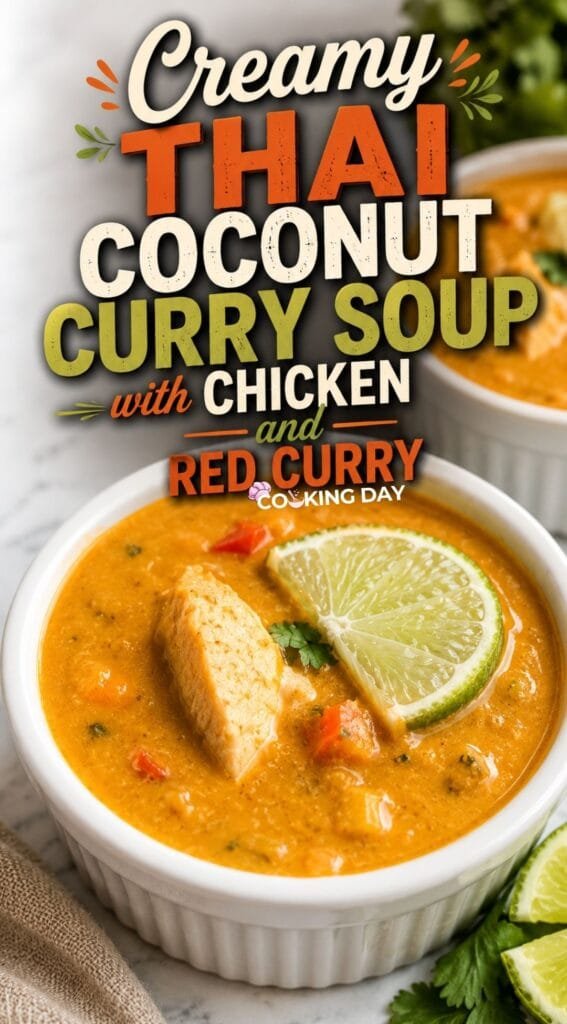
Why This Thai Coconut Curry Soup Works
Red curry paste creates a flavorful base. Cooking it briefly with garlic, ginger, and coriander helps distribute those flavors throughout the soup.
Full-fat coconut milk makes the broth creamy. It balances the spices while giving the soup a rich consistency without requiring cream.
Three bell peppers add color and texture. Green, red, and yellow peppers bring a colorful mix while retaining a little bite.
The chicken cooks directly in the soup. Browning it first develops flavor, then simmering it in the coconut milk finishes the cooking.
Lime and maple syrup balance the broth. Lime juice adds acidity, while a small amount of maple syrup rounds out the curry and coconut flavors.
Spinach goes in at the end. Baby spinach needs only a short time to wilt, which helps preserve its color and texture.
Ingredients
For the Chicken and Vegetables
- 2 tablespoons extra virgin olive oil
- 1 small yellow onion, diced
- 1 pound boneless, skinless chicken breast, cut into bite-sized cubes
- Sea salt, to taste
- Black pepper, to taste
- 1 medium green bell pepper, diced
- 1 medium red bell pepper, diced
- 1 medium yellow bell pepper, diced
- 2 cups baby spinach
Cut the chicken into similar-sized pieces so they cook at roughly the same rate.
The bell peppers cook briefly before the coconut milk is added. They should soften slightly while still retaining some texture in the finished soup.
For the Coconut Curry Broth
- 3 to 4 garlic cloves, minced
- 1 (1-inch) piece fresh ginger, peeled and minced
- 1½ teaspoons ground coriander
- 3 tablespoons Thai red curry paste
- 1 (14-ounce) can full-fat coconut milk
- 2 tablespoons fresh lime juice
- 1 tablespoon maple syrup
Thai red curry paste can vary considerably between brands, particularly in heat and saltiness. The 3 tablespoons in this recipe create the curry base, but you can adjust the overall seasoning after the soup has simmered.
Full-fat coconut milk gives the broth its creamy consistency. If the contents have separated in the can, stir them together before adding the coconut milk to the pot.
For Serving
- 3 tablespoons fresh cilantro, chopped
- 1 large lime, thinly sliced into half rounds
Fresh cilantro and lime add brightness just before serving and provide a fresh contrast to the creamy coconut broth.
Equipment
- Large high-sided skillet, Dutch oven, or soup pot
- Wooden spoon or spatula
- Cutting board
- Sharp knife
- Instant-read thermometer
A high-sided skillet works well, but a Dutch oven or soup pot gives you plenty of room for stirring the chicken and vegetables into the coconut broth.
Step by Step Instructions
Step 1: Sauté the Onion
Heat 2 tablespoons of extra virgin olive oil in a large high-sided skillet, Dutch oven, or soup pot over medium heat.
Add the diced yellow onion.
Cook for 4 to 5 minutes, stirring occasionally, until the onion has softened and become fragrant.
You aren’t looking for deep browning here. The goal is to soften the onion before adding the chicken.
Step 2: Cook the Chicken
Add the bite-sized chicken pieces to the pot and season with sea salt and black pepper.
Cook for 4 to 5 minutes, stirring often, until the chicken begins to brown on the outside.
The chicken does not need to be completely cooked through at this point. It will finish cooking after the coconut milk is added.
Step 3: Add the Aromatics and Curry Paste
Add the minced garlic, fresh ginger, ground coriander, and Thai red curry paste.
Cook for 1 to 2 minutes, stirring frequently.
The mixture should become noticeably fragrant, and the curry paste should be evenly distributed around the chicken and onions.
Keep everything moving during this step so the garlic and curry paste don’t scorch on the bottom of the pot.
Step 4: Add the Bell Peppers
Add the diced green, red, and yellow bell peppers.
Season with a little additional sea salt and black pepper if needed.
Stir well and cook for 3 to 4 minutes, until the peppers begin to soften.
Don’t cook them until completely tender. They’ll continue cooking once the coconut milk is added, and leaving them with a little texture gives the finished soup a better contrast.
Step 5: Add the Coconut Milk
Pour in the full-fat coconut milk and stir until everything is evenly combined.
Bring the soup to a gentle simmer.
Cook for approximately 4 to 5 minutes, or until the broth has slightly thickened and the chicken is completely cooked through.
Check a larger piece of chicken with an instant-read thermometer. It should reach 165°F (74°C) before serving.
Avoid aggressively boiling the soup. A gentle simmer is enough to finish cooking the chicken and bring the flavors together.
Step 6: Add the Spinach, Lime, and Maple Syrup
Stir in the baby spinach, fresh lime juice, and maple syrup.
Cook briefly, just until the spinach has wilted into the soup.
Taste the broth and adjust the sea salt, black pepper, lime juice, or maple syrup as needed.
The goal is a balanced broth where the coconut milk remains creamy, the curry provides warmth, the lime adds brightness, and the maple syrup rounds out the flavors without making the soup noticeably sweet.
Step 7: Garnish and Serve
Remove the soup from the heat and ladle it into individual bowls.
Top each serving with chopped fresh cilantro.
Add thin lime half rounds for serving, if desired.
Serve immediately while the soup is hot..
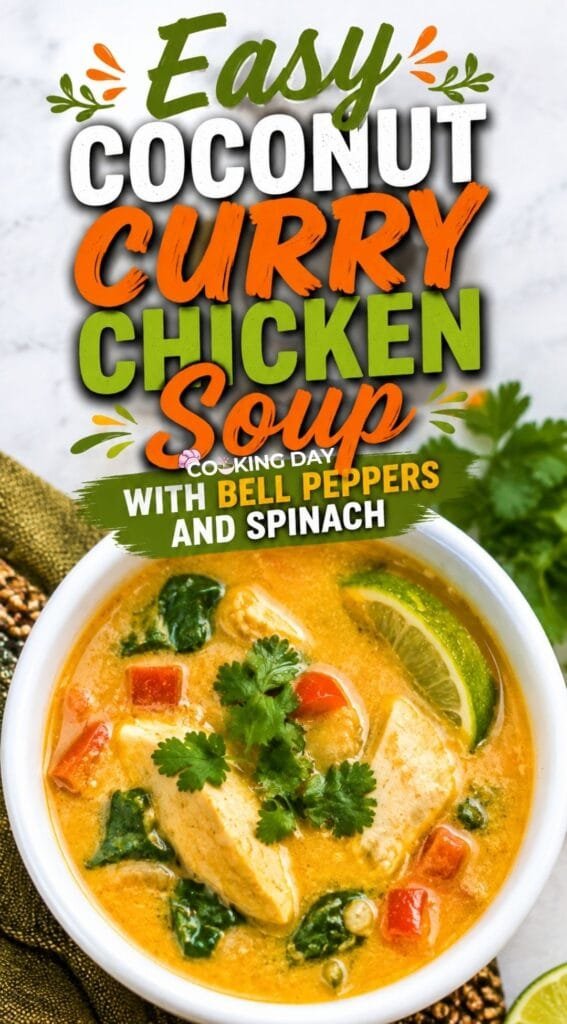
Tips for the Best Thai Coconut Curry Soup
Cut the chicken evenly. Similar-sized pieces are more likely to finish cooking at the same time.
Don’t fully cook the chicken during the browning step. It will continue cooking once the coconut milk is added.
Cook the curry paste briefly before adding liquid. Giving the curry paste, garlic, ginger, and coriander 1 to 2 minutes in the pot helps their flavors become fragrant.
Watch the garlic carefully. Stir frequently during the aromatic step so it doesn’t scorch.
Keep some texture in the peppers. They should be slightly tender rather than completely soft.
Use full-fat coconut milk for the creamiest result. Stir it before adding if the coconut cream and liquid have separated in the can.
Add the spinach last. Baby spinach wilts quickly and doesn’t need prolonged cooking.
Taste before making final adjustments. Curry paste brands differ, so check the finished broth before adding more salt or changing the lime and maple syrup balance.
Common Mistakes to Avoid
Overcooking the chicken before adding the coconut milk. Browning the outside is enough during the first cooking stage because the chicken finishes in the broth.
Scorching the curry paste and aromatics. Garlic, ginger, spices, and curry paste need only a short cooking time before the peppers are added.
Overcooking the bell peppers. They cook before and after the coconut milk is added, so don’t wait until they’re completely soft during the first stage.
Boiling the soup aggressively. Maintain a gentle simmer once the coconut milk goes into the pot.
Relying only on cooking time for the chicken. Check that the chicken reaches 165°F (74°C), particularly if some pieces are larger than others.
Adding the spinach too early. Baby spinach needs only enough heat to wilt.
Adjusting the seasoning before tasting. The curry paste already contributes significant flavor, and its salt and heat level can vary by brand.
Expert Tips
The curry paste is one of the biggest variables in this soup. Different brands can vary in both intensity and saltiness, so taste the broth near the end of cooking before deciding whether it needs additional seasoning.
When cooking the chicken, focus on developing a little color on the exterior rather than trying to cook it completely during the first stage. This prevents the chicken from spending unnecessary extra time over the heat before it finishes cooking in the coconut broth.
Finally, add the lime juice and maple syrup near the end. This makes it easier to taste the finished broth and fine-tune the balance between creamy, spicy, tangy, and lightly sweet flavors.
Variations
- Spicier coconut curry soup: Add a little more red curry paste if you know the heat level of your preferred brand and want a stronger curry flavor.
When adjusting the curry paste, lime, or maple syrup, make small changes and taste between additions. It’s easier to build the flavor gradually than to correct an overly spicy, acidic, or sweet broth.
Ingredient Substitutions
Extra virgin olive oil: Use another neutral cooking oil suitable for sautéing if needed.
Green, red, or yellow bell pepper: If you’re missing one color, you can use more of another bell pepper while keeping the overall amount of peppers similar.
The red curry paste, coconut milk, ginger, garlic, lime, and cilantro are important to the overall flavor profile, so keeping those ingredients will give you the closest result.
What to Serve With Thai Coconut Curry Soup
This creamy curry soup already includes chicken and plenty of vegetables, so it can easily stand on its own as a main course. If you want to make the meal more substantial, rice is a natural addition for soaking up the coconut curry broth.
For another fresh, colorful dish alongside it, Thai Green Papaya Salad adds a crisp contrast to the warm, creamy soup.
You could also pair it with Vietnamese Spring Rolls for a lighter side with fresh vegetables and herbs.
Other simple serving options include:
- Steamed jasmine rice
- Brown rice
- Lime wedges
- Extra fresh cilantro
- Lightly cooked green vegetables
For a lighter dinner, serve the soup on its own with plenty of cilantro and lime. For a more filling meal, add a scoop of rice to each bowl or serve it on the side.
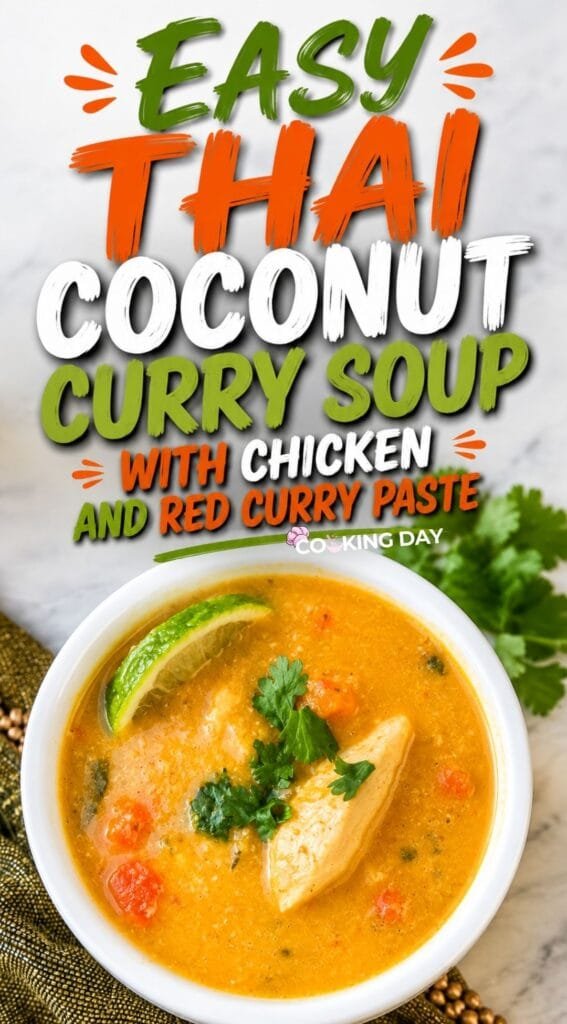
Storage Instructions
Let leftover Thai Coconut Curry Soup cool slightly, then transfer it to an airtight container and refrigerate promptly.
Refrigerate promptly and use within 3 to 4 days.
When reheating, warm the soup gently on the stovetop until the chicken and broth are heated through. Avoid prolonged vigorous boiling, which can overcook the chicken and vegetables.
Stir the soup well as it reheats because the coconut broth may separate slightly during refrigeration.
For the freshest flavor, add extra cilantro and lime after reheating rather than storing large amounts of garnish in the soup.
More Recipes to Try
If you enjoy flavorful chicken dishes with plenty of herbs, spices, or sauce, try these next:
- Thai Basil Chicken for another Thai-inspired chicken dinner with plenty of fresh herb flavor.
- Chicken Satay with Peanut Sauce for tender chicken skewers paired with a rich peanut sauce.
- Sweet and Spicy Korean Fried Chicken when you’re looking for something crispy with a sweet and spicy glaze.

Final Thoughts
This Thai Coconut Curry Soup delivers plenty of flavor without requiring a long simmer. Chicken, colorful bell peppers, ginger, garlic, and red curry paste create the savory base, while full-fat coconut milk turns it into a rich, creamy broth.
The finishing ingredients make a noticeable difference. Baby spinach adds freshness and color, lime juice brightens the coconut broth, and a small amount of maple syrup rounds out the curry without making the soup overly sweet.
Serve it hot with fresh cilantro and lime, either on its own for a lighter meal or with rice when you want something more substantial.
Thai Coconut Curry Soup

Equipment
- Large high-sided skillet, Dutch oven, or soup pot
- Wooden spoon or spatula
- Cutting board
- Sharp knife
Ingredients
- 2 tablespoons extra virgin olive oil
- 1 small yellow onion, diced
- 1 pound boneless, skinless chicken breast, cut into bite-sized cubes
- Sea salt, to taste
- Black pepper, to taste
- 3 to 4 garlic cloves, minced
- 1 (1-inch) piece fresh ginger, peeled and minced
- 1½ teaspoons ground coriander
- 3 tablespoons Thai red curry paste
- 1 medium green bell pepper, diced
- 1 medium red bell pepper, diced
- 1 medium yellow bell pepper, diced
- 1 (14-ounce) can full-fat coconut milk
- 2 cups baby spinach
- 2 tablespoons fresh lime juice
- 1 tablespoon maple syrup
- 3 tablespoons fresh cilantro, chopped
- 1 large lime, thinly sliced into half rounds, for serving
Instructions
1. Sauté the Onion
- Heat the olive oil in a large high-sided skillet, Dutch oven, or soup pot over medium heat.Add the onion and cook for 4 to 5 minutes, stirring occasionally, until softened and fragrant.
2. Cook the Chicken
- Add the cubed chicken and season with sea salt and black pepper.Cook for 4 to 5 minutes, stirring often, until the chicken begins to brown on the outside. It does not need to be completely cooked through at this stage.
3. Add the Aromatics and Curry Paste
- Add the garlic, ginger, ground coriander, and Thai red curry paste.Cook for 1 to 2 minutes, stirring frequently, until fragrant and the curry paste is evenly distributed.
4. Cook the Bell Peppers
- Add the green, red, and yellow bell peppers. Season with additional salt and black pepper, if needed.Stir well and cook for 3 to 4 minutes, until the peppers begin to soften.
5. Add the Coconut Milk
- Pour in the coconut milk and stir until everything is well combined.Bring to a gentle simmer and cook for about 4 to 5 minutes, or until the broth has slightly thickened and the chicken is completely cooked through.The chicken should reach an internal temperature of 165°F (74°C).
6. Finish the Soup
- Stir in the baby spinach, lime juice, and maple syrup.Cook briefly, just until the spinach wilts. Taste and adjust the salt, black pepper, lime juice, or maple syrup as desired.
7. Serve
- Remove from the heat and ladle the soup into bowls.Top with chopped fresh cilantro and thin lime slices, if desired. Serve immediately.
Notes
- Curry paste: Thai red curry pastes vary in heat and saltiness. Start with the amount listed, then adjust according to the brand you use and your preferred spice level.
- Chicken: Cut the chicken into similar-sized pieces so they cook evenly. Make sure the chicken reaches 165°F (74°C) before serving.
- Coconut milk: Full-fat coconut milk gives the soup its richest, creamiest consistency. Stir the coconut milk before measuring if it has separated in the can.
- Bell peppers: Cook the peppers until slightly tender while leaving a little texture. Avoid overcooking them before adding the coconut milk.
- Spinach: Add the baby spinach near the end because it only needs a short time to wilt.
- Flavor balance: Lime juice adds acidity while maple syrup provides a small amount of sweetness to balance the curry paste and coconut milk.