
Some links on this page are affiliate links. This means we may earn a commission at no additional cost to you if you click through and make a purchase, you can check our Affiliate Disclosure. Thank you for your support!
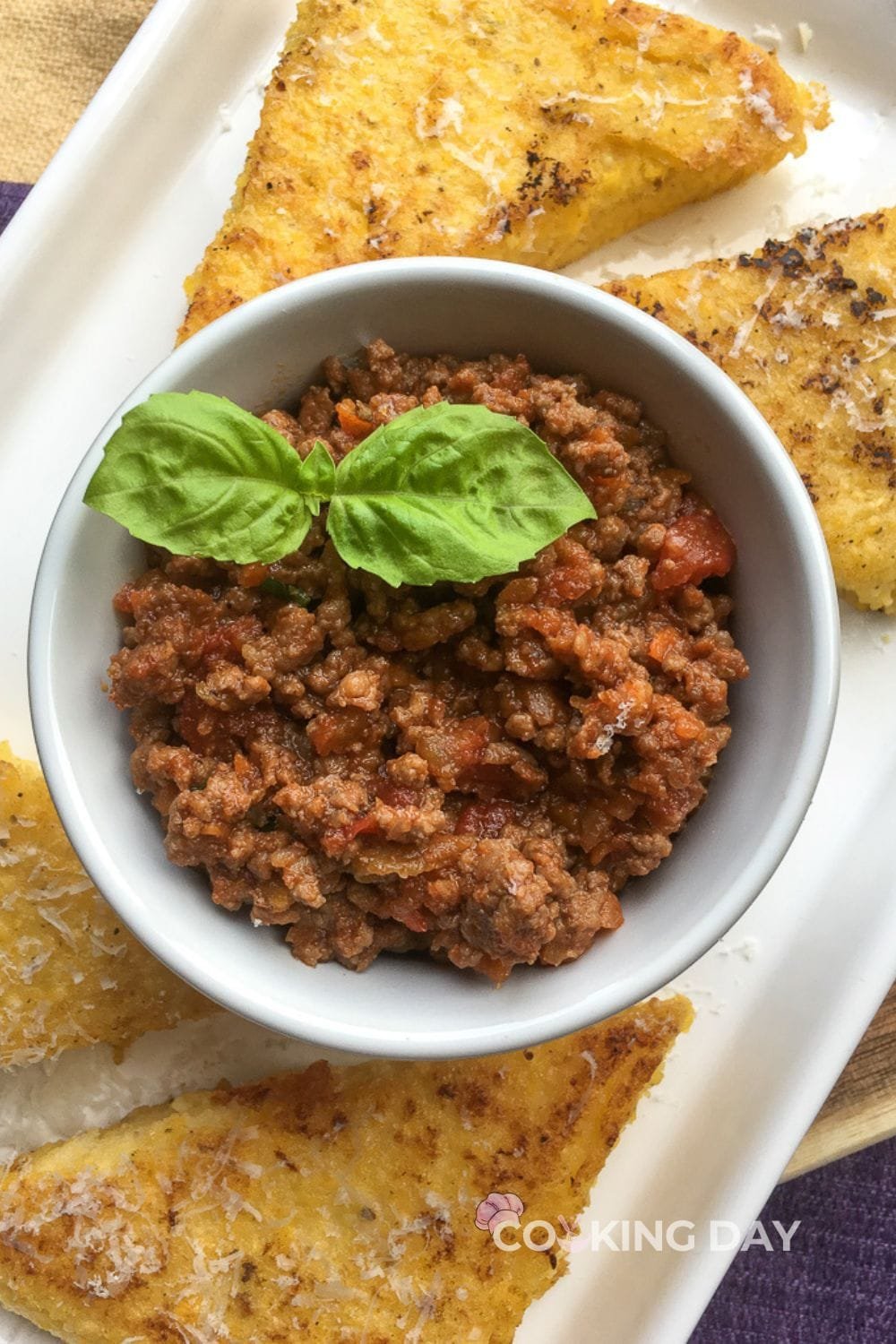
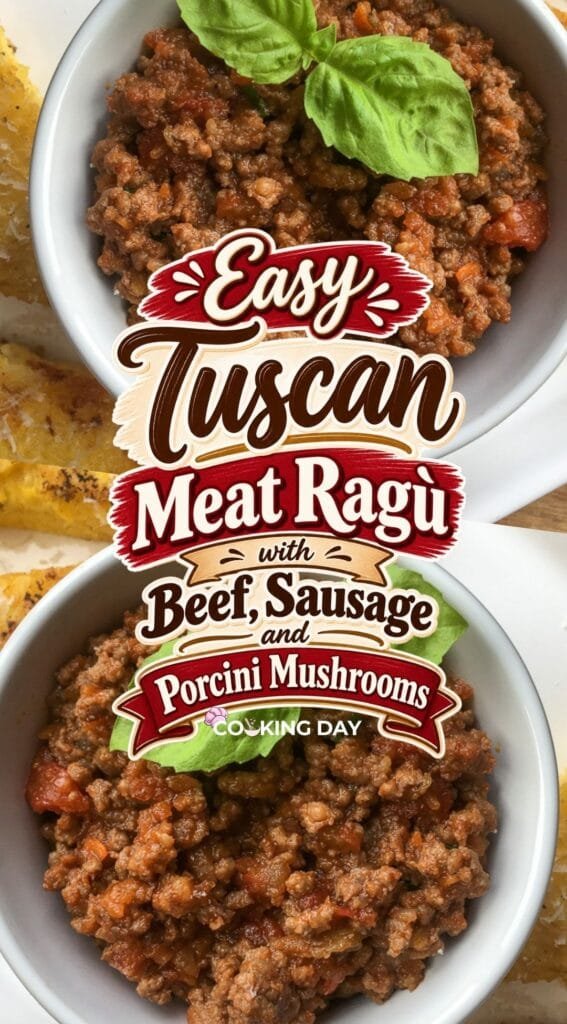
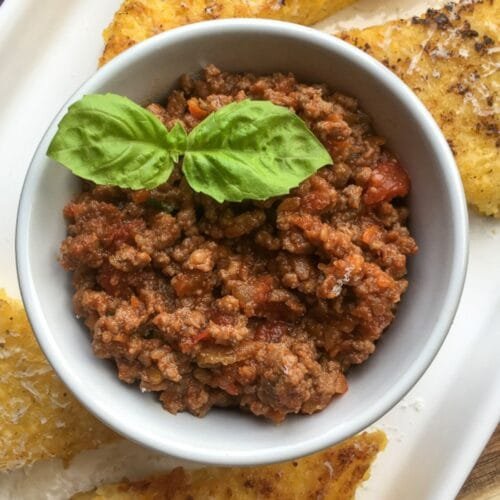
This Tuscan Meat Ragù is a hearty Italian meat sauce made with ground beef, spicy and sweet Italian sausage, porcini mushrooms, red wine, and tomatoes. It simmers slowly until the sauce becomes thick and rich, with tender pieces of meat in every spoonful.
The flavor starts with a soffritto of red onion, carrots, and celery cooked until tender and lightly browned. Dried porcini add an earthy, savory note, while the red wine helps bring together the meat, vegetables, and tomatoes without overpowering them.
What I love most about this ragù is how well it pairs with creamy polenta. The soft polenta catches the thick sauce beautifully, making this a satisfying main course. You can also spoon smaller portions over grilled polenta wedges for an appetizer.
Why This Tuscan Meat Ragù Works
Three meats build a rich base. Ground beef gives the ragù its hearty texture, while spicy and sweet Italian sausage add seasoning and a balanced touch of heat.
The soffritto develops flavor before the meat goes in. Cooking the red onion, carrots, and celery until tender and lightly browned brings out their natural sweetness.
Porcini add concentrated savory flavor. The reconstituted mushrooms bring an earthy note that works particularly well with beef and sausage.
Red wine helps capture the browned bits. Deglazing the Dutch oven loosens the flavorful bits left behind after browning the meat.
A gentle uncovered simmer controls the consistency. The sauce gradually reduces until it is thick enough to cling to polenta while remaining moist and spoonable.
Ingredients
For the Soffritto
- 2 tablespoons extra virgin olive oil
- ½ large red onion, finely chopped
- 2 carrots, finely chopped
- 2 celery stalks, finely chopped
Red onion is intentional in this soffritto. As it softens and takes on a little color, its mild sweetness balances the savory meat and tomatoes.
For the Meat Ragù
- ½ ounce dried porcini mushrooms
- ⅓ pound bulk spicy Italian sausage
- ⅓ pound bulk sweet Italian sausage
- 1 pound lean ground beef
- ½ cup dry red wine
- 1 (14.5-ounce) can Italian plum tomatoes, undrained
- Sea salt, to taste
- Black pepper, to taste
- Strained liquid from reconstituting the porcini mushrooms
- Water, as needed
When reconstituting the porcini, use only the amount of liquid needed to fully cover and soften the mushrooms according to the package directions. This helps prevent adding an unnecessarily large amount of liquid to the ragù.
Equipment
- 5 or 6-quart Dutch oven
- Wooden spoon or spatula
- Cutting board
- Sharp knife
- Fine-mesh strainer, cheesecloth, or coffee filter
A heavy Dutch oven is useful for this recipe because it provides plenty of room for browning the meat and maintains steady heat during the simmer.
Step by Step Instructions
Step 1: Prepare the Porcini Mushrooms
Reconstitute the dried porcini mushrooms according to the package directions, using only the amount of liquid needed to fully cover and soften them.
Once softened, lift the mushrooms from the liquid and chop them into smaller pieces.
Strain the soaking liquid carefully through a coffee filter, cheesecloth, or a very fine-mesh strainer to remove sediment. Reserve the strained liquid for the sauce.
Don’t skip the straining step. Dried porcini can leave fine sediment behind, and removing it prevents a gritty texture in the finished ragù.
Step 2: Cook the Soffritto
Heat 2 tablespoons of extra virgin olive oil in a 5 or 6-quart Dutch oven over medium heat.
Add the finely chopped red onion, carrots, and celery. Cook for 8 to 10 minutes, stirring frequently, until the vegetables are tender and lightly browned.
You aren’t looking for deeply caramelized vegetables here. They should soften, lose their raw texture, and develop a little color around the edges.
Step 3: Cook the Porcini and Sausage
Add the chopped porcini mushrooms, spicy Italian sausage, and sweet Italian sausage.
If needed, increase the heat slightly to encourage browning.
Cook, stirring frequently and breaking the sausage into small pieces with a wooden spoon, until the sausage is browned and no longer pink.
Step 4: Brown the Ground Beef
Add the ground beef and break it apart with your wooden spoon or spatula.
Continue cooking until the beef is completely browned.
Check the bottom of the Dutch oven before moving on. If the sausage and beef have released a noticeable amount of excess fat, carefully drain and discard it. If there isn’t much excess fat, you can leave it in the pot.
Step 5: Deglaze with Red Wine
Pour in ½ cup of dry red wine.
As the wine begins to simmer, scrape the bottom of the Dutch oven with your wooden spoon or spatula to loosen the browned bits.
Cook until the wine has reduced by about half.
Step 6: Add the Tomatoes and Porcini Liquid
Add the undrained Italian plum tomatoes and the strained porcini soaking liquid.
Break up the tomatoes with your wooden spoon and stir everything together.
Season with sea salt and black pepper to taste, then bring the sauce to a gentle simmer.
Step 7: Simmer the Ragù
Reduce the heat as needed to maintain a gentle simmer.
Cook the ragù uncovered for 45 to 50 minutes, stirring occasionally.
Keep an eye on the consistency, particularly toward the end of cooking. The finished ragù should be rich and thick but still moist enough to spoon easily.
If the sauce becomes too thick or starts looking dry before it has finished simmering, add a small amount of water and stir. Add only as much as needed to loosen the sauce.
Step 8: Serve
Remove the ragù from the heat and serve it warm over creamy polenta.
For an appetizer, prepare grilled polenta wedges and top each one with a smaller spoonful of warm ragù.
Tips for the Best Tuscan Meat Ragù
- Chop the soffritto vegetables finely. Small, evenly sized pieces soften at roughly the same rate and blend naturally into the finished sauce.
- Keep the soffritto over moderate heat. Medium heat gives the vegetables enough time to soften and lightly brown without scorching the finely chopped onion.
- Use a dry red wine. Choose a red wine that isn’t noticeably sweet so it complements the savory meat and tomatoes.
- Give the meat a chance to brown. Stir to break it apart, but avoid constantly moving it around. Brief contact with the hot surface of the Dutch oven helps develop better color.
- Control the mushroom soaking liquid. Use only enough liquid to cover and soften the dried porcini rather than soaking them in an unnecessarily large volume.
- Watch the consistency instead of relying only on time. Your ragù may reduce slightly faster or slower depending on the width of the pot and the strength of the simmer.
- Add water gradually. If the sauce needs loosening, start with a small amount. It’s easier to add more than to reduce an overly diluted sauce again.
Common Mistakes to Avoid
- Not straining the mushroom liquid. Dried porcini can contain fine sediment that may give the finished sauce an unpleasant gritty texture.
- Cooking the soffritto over excessive heat. Finely chopped vegetables can brown too quickly before they have time to become tender.
- Rushing the soffritto. Give the red onion, carrots, and celery their full cooking time so they soften and develop a little color before you add the meat.
- Leaving the meat in large clumps. Break the sausage and beef into smaller pieces as they cook so they’re distributed evenly throughout the sauce.
- Draining all the fat automatically. Only drain the Dutch oven if there is a noticeable amount of excess fat. Some of the rendered fat contributes flavor and body.
- Letting the sauce reduce too far. A proper ragù should be thick, but it shouldn’t be dry. Add a little water if needed during the final simmer.
Expert Tips
For an extra layer of savory flavor, you can reconstitute the dried porcini in warm beef broth instead of water. Use only enough broth to fully cover and soften the mushrooms, and strain it carefully before adding it to the ragù.
Browning also matters when you’re cooking the sausage and beef. Once you’ve broken the meat into smaller pieces, give it brief periods of contact with the hot Dutch oven instead of stirring continuously. This encourages browning rather than simply steaming the meat.
During the final simmer, pay attention to what the sauce looks like rather than watching the clock alone. Different Dutch ovens have different surface areas, and a wider pot can evaporate moisture more quickly.
When the ragù is ready, it should hold together on a spoon without looking dry. If you drag your spoon across the bottom of the Dutch oven, the sauce should slowly settle back into place.
Variations
- Milder meat ragù: Replace the spicy Italian sausage with the same amount of additional sweet Italian sausage for a gentler flavor.
- Spicier ragù: Replace some or all of the sweet Italian sausage with spicy Italian sausage if you prefer more heat.
- Chunkier tomato ragù: Break the plum tomatoes into slightly larger pieces if you prefer more noticeable tomato texture in the finished sauce.
- Appetizer version: Let prepared polenta cool and firm up, cut it into wedges, and grill until lightly crisp. Top each wedge with a small spoonful of warm ragù.
Ingredient Substitutions
Because the beef, sausage, porcini, wine, and tomatoes each contribute to the character of this Tuscan Meat Ragù, substitutions are best kept fairly limited.
- Spicy Italian sausage: Replace it with the same amount of sweet Italian sausage for a milder ragù.
- Sweet Italian sausage: Replace it with the same amount of spicy Italian sausage if you want additional heat.
I wouldn’t replace the porcini simply to fill out a substitution list. Their concentrated mushroom flavor is an important part of this particular sauce.
What to Serve With Tuscan Meat Ragù
Creamy polenta is my first choice for serving this ragù. Its mild flavor and soft texture make a great base for the rich meat sauce.
You can also pair or finish it with:
- Grilled polenta wedges
- Crusty Italian bread
- A simple green salad
- Roasted vegetables
- Sautéed greens
- Freshly grated Parmesan cheese, if desired
If you’re serving the ragù as a main course, a fresh salad or simply prepared green vegetable can provide a nice contrast to the rich sauce.
For an appetizer, grilled polenta wedges topped with smaller portions of ragù give you the same combination of flavors in a more compact serving.
Storage Instructions
Let leftover ragù cool slightly, then transfer it to an airtight container and refrigerate promptly.
Store the ragù in the refrigerator for up to 3 to 4 days.
Reheat it gently on the stovetop until heated through. The sauce will usually thicken as it sits, so add a small splash of water if needed to loosen it while reheating.
Final Thoughts
This Tuscan Meat Ragù gets its character from building flavor one stage at a time. The red onion, carrots, and celery soften and lightly brown before the sausage and beef go in, then red wine, tomatoes, and porcini bring everything together during the long, gentle simmer.
The best cue for doneness is the consistency. You want a rich, thick sauce that still has enough moisture to spoon generously over creamy polenta. Serve it that way for a hearty main course, or spoon smaller portions onto grilled polenta wedges for an Italian-inspired appetizer.
Tuscan Meat Ragù

Equipment
- 5 or 6-quart Dutch oven
- Wooden spoon or spatula
- Cutting board
- Sharp knife
- Fine-mesh strainer, cheesecloth, or coffee filter
Ingredients
- 2 tablespoons extra virgin olive oil
- ½ large red onion, finely chopped
- 2 carrots, finely chopped
- 2 celery stalks, finely chopped
- ½ ounce dried porcini mushrooms
- ⅓ pound bulk spicy Italian sausage
- ⅓ pound bulk sweet Italian sausage
- 1 pound lean ground beef
- ½ cup dry red wine
- 1 (14.5-ounce) can Italian plum tomatoes, undrained
- Sea salt, to taste
- Black pepper, to taste
- Reserved liquid from reconstituting the porcini mushrooms
- Water, as needed
Instructions
1. Prepare the Porcini Mushrooms
- Reconstitute the dried porcini mushrooms according to the package directions. Once softened, remove the mushrooms from the liquid and chop them.Strain the soaking liquid through a coffee filter or cheesecloth to remove any sediment. Reserve the strained liquid for the sauce.
2. Cook the Soffritto
- Heat the olive oil in a 5 or 6-quart Dutch oven over medium-high heat.Add the red onion, carrots, and celery. Cook for 8 to 10 minutes, stirring frequently, until the vegetables are tender and lightly caramelized.
3. Cook the Mushrooms and Sausage
- Add the chopped porcini mushrooms, spicy Italian sausage, and sweet Italian sausage.Cook, stirring frequently and breaking the sausage into small pieces with a wooden spoon, until the sausage is browned and no longer pink.
4. Brown the Ground Beef
- Add the ground beef and cook until completely browned, breaking it apart as it cooks.Carefully drain and discard excess fat from the Dutch oven, if needed.
5. Deglaze with Red Wine
- Pour in the red wine. Scrape the browned bits from the bottom of the Dutch oven with a wooden spoon or spatula.Cook until the wine has reduced by about half.
6. Add the Tomatoes and Mushroom Liquid
- Add the undrained plum tomatoes and reserved porcini mushroom liquid. Break up the tomatoes with the wooden spoon and stir everything together.Season with sea salt and black pepper to taste.
7. Simmer the Ragù
- Reduce the heat to maintain a gentle simmer. Cook uncovered for 45 to 50 minutes, stirring occasionally.If the ragù becomes too thick or dry while simmering, add a small amount of water as needed.
8. Serve
- Remove the ragù from the heat and serve warm over creamy polenta.For an appetizer, spoon a smaller amount of ragù over grilled polenta wedges.
Notes
- For more flavor: Reconstitute the dried porcini mushrooms in warm beef broth instead of water. Strain the liquid carefully before adding it to the ragù because dried mushrooms can contain fine sediment.
- Red onion: Red onion is intentionally used in the soffritto. Cooking it with the carrots and celery until lightly caramelized gives the sauce additional sweetness and depth.
- Tomatoes: Break up the whole plum tomatoes as they cook so they blend evenly into the ragù.
- Consistency: Ragù should be rich and thick but still moist enough to spoon over polenta. Add a little water if it reduces too quickly.
- Serving: Creamy polenta makes this a hearty main course. Grilled polenta wedges topped with smaller portions of ragù work well as an appetizer.
- Storage: Cool leftovers completely, then refrigerate them in an airtight container. Reheat gently on the stovetop, adding a splash of water if the sauce has thickened.